Singapore Co-Working Space Stationery Supply Models: Subscription-Based vs On-Demand Supply and Usage Tracking
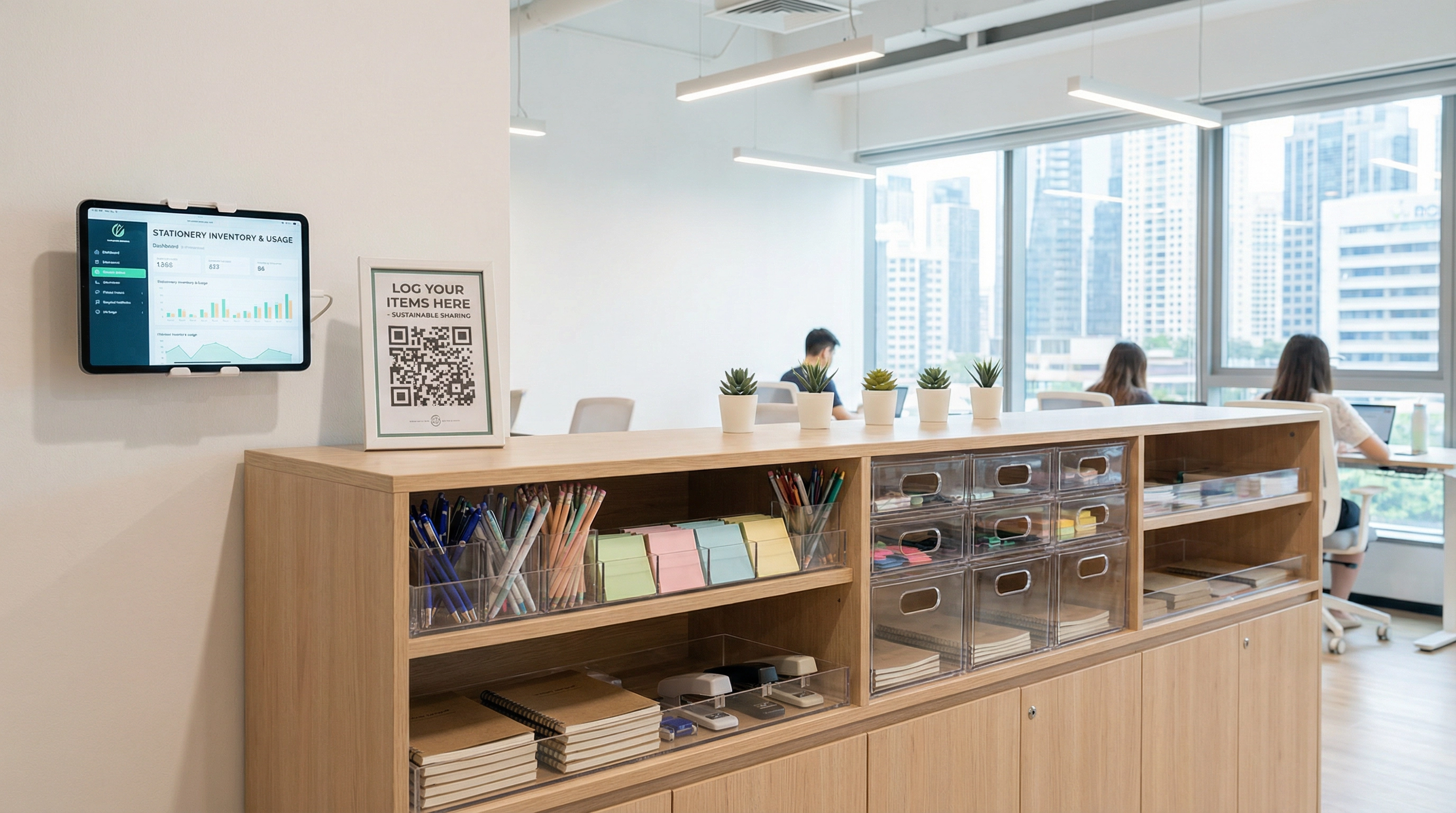
In March 2024, a 180-seat co-working space in Singapore's Tanjong Pagar district switched from an unlimited free stationery model to a usage-tracked subscription system after discovering that their monthly stationery costs had ballooned to SGD 4,200 (SGD 23.33 per seat)—nearly triple the SGD 1,400-1,600 they'd budgeted based on industry benchmarks of SGD 7-9 per seat. Investigation revealed that a handful of members were treating the shared supply station as their personal stationery warehouse, taking boxes of pens, reams of printer paper, and stacks of notebooks home for personal use. One member had taken 47 ballpoint pens in a single month. The unlimited model, intended to create a generous, friction-free member experience, had instead created a tragedy of the commons where individual overconsumption imposed costs on all members through higher membership fees.
The shift to usage tracking—where members scan a QR code to log each item taken and receive a monthly usage report—reduced stationery costs by 58% within three months to SGD 1,760 (SGD 9.78 per seat) while maintaining member satisfaction scores above 4.2/5.0. This case illustrates the central challenge facing Singapore's rapidly growing co-working sector (estimated at 120-150 spaces across the island as of 2024): how to provide convenient access to shared stationery while controlling costs, preventing abuse, and meeting increasingly vocal tenant demands for sustainability and waste reduction.
Subscription vs On-Demand Models: Cost Allocation Philosophies
Co-working spaces fundamentally differ from traditional offices in their stationery supply approach because costs must be allocated across dozens or hundreds of independent members rather than a single corporate entity. This creates two competing philosophies: subscription models where stationery costs are bundled into membership fees (creating predictable revenue but requiring usage controls to prevent abuse), and on-demand models where members pay separately for stationery (creating usage-based cost recovery but adding transaction friction that degrades member experience).
Subscription models dominate among premium co-working brands targeting established SMEs and corporate satellite teams. Spaces like WeWork, JustCo, and The Great Room include "reasonable stationery usage" as part of their SGD 600-900 per seat monthly memberships, defining "reasonable" through either explicit monthly limits (e.g., 5 pens, 2 notebooks, 100 sheets of printer paper per member) or implicit social norms reinforced through usage tracking and gentle reminders to high-consumption members. The appeal of this model is simplicity—members don't think about stationery costs when grabbing a pen for a client meeting, and the space operator can budget stationery as a fixed percentage of membership revenue (typically targeting 1.5-2.5%).
However, subscription models only work if usage stays within budgeted parameters. The Tanjong Pagar space's experience shows what happens when usage controls are too lax—costs spiral beyond sustainable levels, forcing either membership fee increases (which hurt competitiveness) or service reductions (which hurt member satisfaction). Effective subscription models require three elements: clear usage guidelines communicated during onboarding, visible tracking systems that make members aware of their consumption, and graduated responses to excessive usage ranging from friendly reminders to additional charges for consumption beyond reasonable limits.
On-demand models are more common among budget-focused co-working spaces targeting freelancers, startups, and hot-desk users. Spaces like Collision 8 or The Co. offer lower base membership fees (SGD 350-500 per seat) but charge separately for stationery at cost-plus pricing (typically 20-30% markup over wholesale cost). Members either purchase items at the reception desk or use vending machine-style dispensers that accept contactless payment or deduct from prepaid accounts. This model ensures perfect cost recovery—the space operator never subsidizes stationery consumption—but it creates transaction friction that some members find annoying, particularly when they need a single pen or notepad and must interrupt their work to make a purchase.
A hybrid approach is emerging among mid-tier spaces: include basic stationery (pens, pencils, notepads, printer paper up to reasonable limits) in membership fees, but charge separately for premium or high-cost items (specialty notebooks, art supplies, binding services, large-format printing). This balances convenience for everyday needs against cost control for discretionary consumption. One Bugis-area space implements this through a two-tier supply station: a "free zone" with basic items available without tracking, and a "premium zone" with higher-value items requiring QR code scanning and monthly billing. Members appreciate not having to think about grabbing a pen, while the space avoids subsidizing expensive items that only a minority of members use.
Usage Tracking Technology: From Honor Systems to Digital Accountability
Early co-working spaces relied on honor systems—open supply cabinets where members took what they needed without recording anything. This worked reasonably well in small, community-focused spaces (30-50 members) where social accountability and personal relationships discouraged abuse. But as spaces scaled to 100+ members and shifted toward transactional membership models (hot-desking, short-term contracts), honor systems broke down. Anonymous overconsumption became common, and spaces had no data to identify high-usage members or understand consumption patterns.
The first generation of usage tracking used manual logbooks where members wrote their name and items taken. This provided basic accountability but was cumbersome (members often forgot to log items), created incomplete data (handwriting was illegible or members logged inaccurately), and required staff time to transcribe logbook entries into spreadsheets for analysis. Compliance rates rarely exceeded 60-70%, meaning the data was too incomplete to support cost allocation or behavioral interventions.
Current best practice uses QR code-based digital tracking integrated with member management systems. Each stationery item has a QR code label, and members scan the code with their smartphone when taking an item. The scan logs to their member account, creating a real-time usage record visible to both the member (through a mobile app or web portal) and the space operator (through an admin dashboard). Implementation costs are modest—SGD 2,500-4,000 for QR code labels, signage, and software integration—and the system typically pays for itself within 3-4 months through reduced overconsumption.
The Tanjong Pagar space's QR tracking system revealed usage patterns invisible under their previous honor system. The top 10% of members (by stationery consumption) accounted for 47% of total usage, with average monthly consumption of SGD 32 per member versus SGD 8 for the median member. Drilling into individual usage showed that overconsumption wasn't malicious hoarding but rather a few members using the space as their primary office and treating shared stationery as their personal supply closet. Armed with this data, the facilities team could have targeted conversations with high-usage members, explaining that while occasional high consumption was fine, sustained usage at 4x the average imposed costs on other members and asking them to moderate consumption or pay supplemental fees.
Digital tracking also enables automated interventions that maintain member experience while controlling costs. The system can send friendly reminders when a member's monthly usage exceeds 150% of the average ("You've used 8 pens this month—our average member uses 3. Please help us keep costs down by taking only what you need"). For members consistently exceeding reasonable limits, the system can automatically add supplemental charges to their monthly invoice (e.g., SGD 0.50 per pen beyond the 5-pen monthly allowance). These automated nudges reduce the need for uncomfortable staff-member conversations while still providing cost control.
Privacy concerns around usage tracking are minimal in practice. Members understand that shared resources require some accountability, and the data collected (number of pens taken, sheets of paper printed) isn't particularly sensitive. The key is transparency—clearly communicating during onboarding that usage is tracked, explaining how the data is used (cost allocation, inventory management, sustainability reporting), and giving members access to their own usage history so they can self-moderate consumption.
Sustainability Requirements: Responding to Tenant Environmental Expectations
Singapore's co-working members, particularly younger professionals and sustainability-focused startups, increasingly expect their workspace to align with environmental values. A 2024 survey of 240 co-working members across 8 Singapore spaces found that 73% considered sustainability practices "important" or "very important" when choosing a workspace, and 41% said they would pay 5-10% higher membership fees for spaces with strong environmental credentials. Stationery supply, while a small part of overall workspace operations, is highly visible to members and thus carries outsized importance in shaping sustainability perceptions.
The most common sustainability intervention is shifting to recycled-content and FSC-certified paper products. Standard copy paper (70-80 GSM, 500 sheets per ream) is available in recycled variants (typically 80-100% post-consumer recycled content) at 8-12% price premiums over virgin-fiber paper. Most co-working spaces absorb this premium rather than passing it to members, viewing it as a worthwhile investment in brand positioning. Similarly, FSC-certified notebooks and notepads (verifying that paper comes from responsibly managed forests) carry 5-8% premiums but signal environmental commitment in a tangible way that members notice daily.
Refillable writing instruments represent another sustainability opportunity. Traditional disposable ballpoint pens create significant waste—a space with 150 members might go through 1,200-1,500 pens annually, generating 3-4 kg of plastic waste. Switching to refillable pens (where members replace only the ink cartridge rather than discarding the entire pen) reduces waste by 70-80% but requires behavior change and slightly higher upfront costs. One Marina Bay space implemented this by providing each new member with a branded refillable pen during onboarding (cost: SGD 3.20 per pen versus SGD 0.40 for disposables) and stocking only refill cartridges (SGD 0.60 each) at the supply station. After 18 months, 68% of members were still using their original pen, and annual pen-related waste had dropped from 3.8 kg to 1.1 kg.
Digital-first policies reduce paper consumption by encouraging members to use digital tools for note-taking, document sharing, and internal communications. Spaces implement this through a combination of technology provision (large-format digital whiteboards, tablet lending programs, cloud storage subscriptions included in membership) and gentle behavioral nudges (printer defaults to duplex mode, monthly usage reports showing paper consumption versus space average, sustainability challenges rewarding low-paper-use members). The most effective interventions make digital alternatives more convenient than paper rather than restricting paper access—members who feel they're being forced to reduce consumption for cost reasons resent it, while members who choose digital tools because they're genuinely more convenient embrace the change.
Waste segregation and recycling infrastructure is table stakes for sustainability-conscious spaces. Separate bins for paper, plastic, and general waste should be located at every supply station and printing area, with clear signage explaining what goes where. Some spaces go further with composting bins for food waste (relevant for spaces with pantries or cafes) and e-waste collection points for dead batteries and broken electronics. The key is making sustainable disposal as easy as throwing everything in general waste—if members have to walk across the floor to find a recycling bin, compliance drops dramatically.
Sustainability reporting to members closes the loop by demonstrating that their individual actions contribute to collective environmental impact. Monthly or quarterly reports showing total paper consumption, waste diverted from landfills through recycling, and carbon footprint reductions from sustainable procurement give members tangible evidence that the space's sustainability initiatives are working. One Raffles Place space publishes a monthly "sustainability scorecard" showing metrics like total paper saved through duplex printing (converted to "trees saved" using standard conversion factors), plastic waste avoided through refillable pens, and percentage of supplies from certified sustainable sources. This transparency builds member buy-in and creates social proof that encourages continued participation.
Cost Benchmarking and Inventory Management Best Practices
Effective stationery management in co-working spaces requires understanding cost benchmarks and implementing inventory controls that balance availability against waste. Industry data from Singapore co-working operators suggests that well-managed spaces should target SGD 7-10 per seat per month in stationery costs (including paper, writing instruments, notebooks, and miscellaneous supplies but excluding printing costs which are typically tracked separately). Spaces consistently exceeding SGD 12-15 per seat likely have either overconsumption issues, inefficient procurement, or product mix skewed toward premium items.
Breaking down the SGD 7-10 target by category provides more granular guidance. Printer paper typically accounts for 35-40% of costs (SGD 2.80-4.00 per seat), writing instruments 25-30% (SGD 1.75-3.00), notebooks and notepads 20-25% (SGD 1.40-2.50), and miscellaneous items like staplers, tape, and folders 10-15% (SGD 0.70-1.50). Spaces with costs significantly outside these ranges should investigate whether they're over-stocking certain categories, experiencing theft or waste, or paying above-market prices due to inefficient procurement.
Inventory management follows different principles than traditional office environments because demand is less predictable (member count fluctuates, usage varies widely by member type) and storage space is often limited. Best practice is to maintain 4-6 weeks of inventory for fast-moving items (printer paper, basic pens, standard notepads) and 8-12 weeks for slower-moving specialty items (colored markers, specialty paper, binding supplies). This balances the need to avoid stockouts (which create member frustration) against the cost of holding excessive inventory (which ties up working capital and storage space).
Automated reordering systems linked to usage tracking data can optimize inventory levels. When printer paper stock drops below the 4-week threshold (calculated based on recent consumption rates), the system automatically generates a purchase order to the supplier. This eliminates the need for manual inventory checks and reduces the risk of stockouts due to staff oversight. However, automated systems require accurate consumption data (which depends on members consistently logging usage) and reliable supplier lead times—if your paper supplier typically delivers in 3-5 days but occasionally takes 10-12 days, you need to set reorder thresholds conservatively to avoid stockouts during delivery delays.
Supplier consolidation reduces procurement complexity and often improves pricing through volume discounts. Rather than ordering printer paper from one supplier, pens from another, and notebooks from a third, consolidate to a single office supplies distributor who can provide the full range of needed items. This simplifies ordering, reduces minimum order quantities (since you're buying multiple categories in each order), and strengthens negotiating position for volume discounts. Most Singapore office supplies distributors offer 8-15% discounts for monthly orders exceeding SGD 800-1,000, which is achievable for co-working spaces with 100+ seats.
Related Articles:
- Singapore Education Sector Back-to-School Procurement Cycles: MOE Tender Schedules and Term-Based Demand Patterns
- Singapore Retail vs B2B Stationery Pricing Structures: Why Corporate Buyers Pay 40-60% Less Than Consumers
- Vendor-Managed Inventory Implementation: Automated Replenishment Systems for Corporate Stationery Programs
Operating a co-working space in Singapore and looking to optimize stationery supply costs while meeting sustainability expectations? Contact our facilities management team to discuss usage tracking systems and sustainable procurement strategies, or request a quote for co-working space stationery programs with digital inventory management.