Screen Printing Ink Adhesion on Aluminum Pens: Why Some Logos Peel Off After Three Months
Screen Printing Ink Adhesion on Aluminum Pens: Why Some Logos Peel Off After Three Months
A client called last quarter, frustrated. They'd distributed 2,000 aluminum pens at a trade show, and within two months, attendees were sending photos of logos that had started flaking off. The pens looked fine initially—crisp imprint, clean edges—but daily handling wore through the ink layer faster than anyone expected. When I asked about their supplier's surface prep process, they had no idea what I was talking about. That's when I realized the issue wasn't the ink formulation or the printing technique itself. It was the pre-treatment step that never happened.
What causes ink to fail on metal surfaces?
Aluminum oxidizes naturally when exposed to air, forming a thin layer that prevents proper ink bonding. If you print directly onto that oxidized surface without mechanical or chemical prep, you're essentially applying ink to a barrier layer that has no real grip. The ink sits on top rather than anchoring into the material. Under normal use—fingers rubbing against the barrel, pens sliding in and out of pockets—that weak bond breaks down quickly.
I've seen suppliers skip degreasing entirely to save time on high-volume orders. They'll wipe the surface with a cloth and call it clean, but skin oils, machining residue, and microscopic contaminants remain. When ink goes over that, adhesion suffers from day one. You might not notice it immediately because the ink looks fine when it's wet and freshly cured. But give it a few weeks of handling, and the failure becomes obvious.
How do production workflows affect durability?
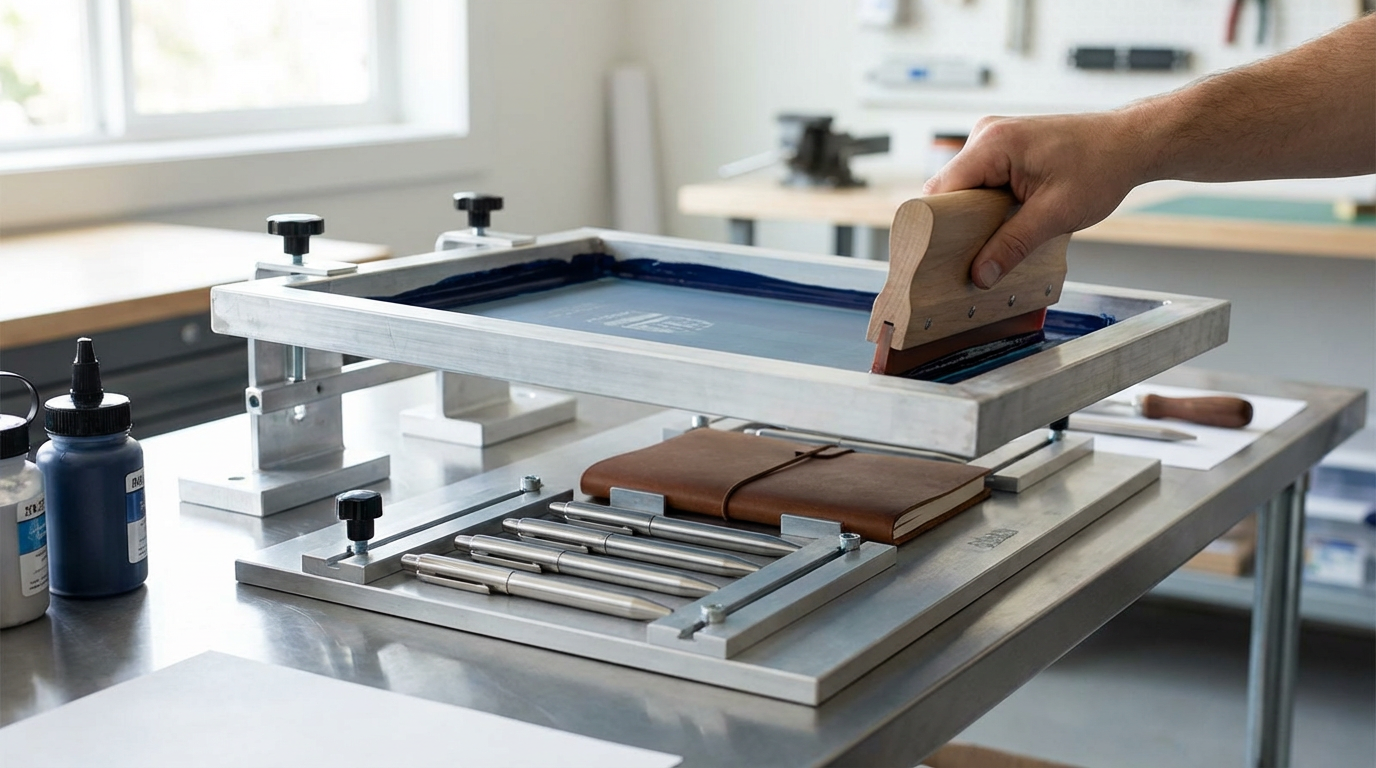
In a properly managed workflow, pens go through solvent degreasing, then either mechanical abrasion or chemical etching to roughen the surface at a microscopic level. That texture gives the ink something to grip. After that, some facilities apply a primer coat specifically formulated for metal substrates. Only then does the actual logo printing happen. Each of these steps adds time and cost, which is why budget suppliers cut corners.
I worked with a factory once that ran pens through an ultrasonic cleaning bath before printing. The difference in adhesion was measurable—pens from that batch passed rub tests that would have destroyed prints from a standard workflow. But ultrasonic cleaning requires equipment investment and adds 15 to 20 minutes per batch. For a supplier competing on price, that's a non-starter. They'll skip it, and the client won't know until the product fails in the field.
Curing temperature and duration matter too. Screen-printed ink on metal needs to reach a specific temperature to fully cross-link. If the oven runs too cool or if pens move through too quickly, the ink never fully hardens. It might feel dry to the touch, but the molecular structure isn't stable. Under stress, it cracks or peels. I've tested samples where the supplier claimed proper curing, but a simple scratch test with a fingernail revealed the ink was still soft underneath.
What should buyers check during pre-production approval?
Ask for a sample that's been through the full production process—not a hand-finished prototype. Request documentation of the surface prep steps: what solvents are used, what abrasion method, whether primer is applied. If the supplier can't provide specifics, that's a warning sign. Reputable facilities have SOPs for this and can walk you through each stage.
Run your own adhesion test. Take a piece of clear tape, press it firmly over the printed area, and peel it off quickly. If any ink lifts, the bond isn't strong enough for daily use. Repeat this five times on different areas of the same pen. Inconsistent results suggest the prep process isn't standardized across the batch.
Check the ink type. Solvent-based inks generally adhere better to metal than water-based formulations, but they come with VOC emissions and longer curing times. UV-curable inks offer fast turnaround and good adhesion if the surface prep is done right, but they require specific equipment. If your supplier is using water-based ink on aluminum without a primer, expect problems.
How does order volume influence quality control?
Large orders often get split across multiple production runs, and consistency becomes harder to maintain. The first batch might go through proper prep because the QC team is paying attention. By the third or fourth run, shortcuts creep in—maybe the degreasing bath isn't refreshed as often, or curing time gets reduced to meet deadlines. I've seen this happen on 10,000-unit orders where the first 2,000 pens were flawless, but quality degraded as the factory rushed to finish.
If you're ordering above 5,000 units, negotiate for batch sampling. Instead of approving one sample and assuming the entire order will match, request samples from each production run. This adds administrative overhead, but it catches issues before the full shipment goes out. I had a client who insisted on this after a bad experience, and it saved them from accepting a batch where the supplier had switched ink suppliers mid-production without notice.
What are the cost trade-offs between proper prep and faster turnaround?
Proper surface treatment adds roughly 10% to 15% to production time and increases per-unit cost by a similar margin. For a 1,000-pen order, that might translate to an extra SGD 150 to SGD 200. But if 30% of those pens fail within six months, you're looking at replacement costs, damaged brand reputation, and the administrative burden of handling complaints. The math favors paying for quality upfront.
Some suppliers offer tiered pricing where you can opt into enhanced prep for a premium. If you're distributing pens to key clients or using them for long-term brand visibility, that premium is worth it. For short-term event giveaways where the pens will be used for a few weeks and discarded, you might accept lower durability to hit a tighter budget. The key is making that choice deliberately rather than discovering the trade-off after the fact.
How do environmental factors accelerate ink failure?
Humidity and temperature swings stress the ink-metal bond. In Singapore's climate, pens stored in non-climate-controlled warehouses can experience condensation cycles that weaken adhesion over time. If your supplier stores finished goods in a hot, humid environment before shipping, that pre-stresses the ink layer. By the time the pens reach end users, they're already compromised.
UV exposure is another factor, though less relevant for pens that spend most of their time indoors. Still, if pens are displayed near windows or used outdoors frequently, UV degradation can fade colors and make the ink brittle. Some inks include UV stabilizers, but not all suppliers use them as standard. If your use case involves outdoor exposure, specify UV-resistant ink in your RFQ.
For businesses planning large-scale pen orders and concerned about durability, discussing surface prep protocols and adhesion testing with your supplier upfront can prevent costly failures down the line.