Infection Control Considerations in Stationery Procurement for Singapore Healthcare Institutions
Infection Control Considerations in Stationery Procurement for Singapore Healthcare Institutions
Published: December 7, 2024
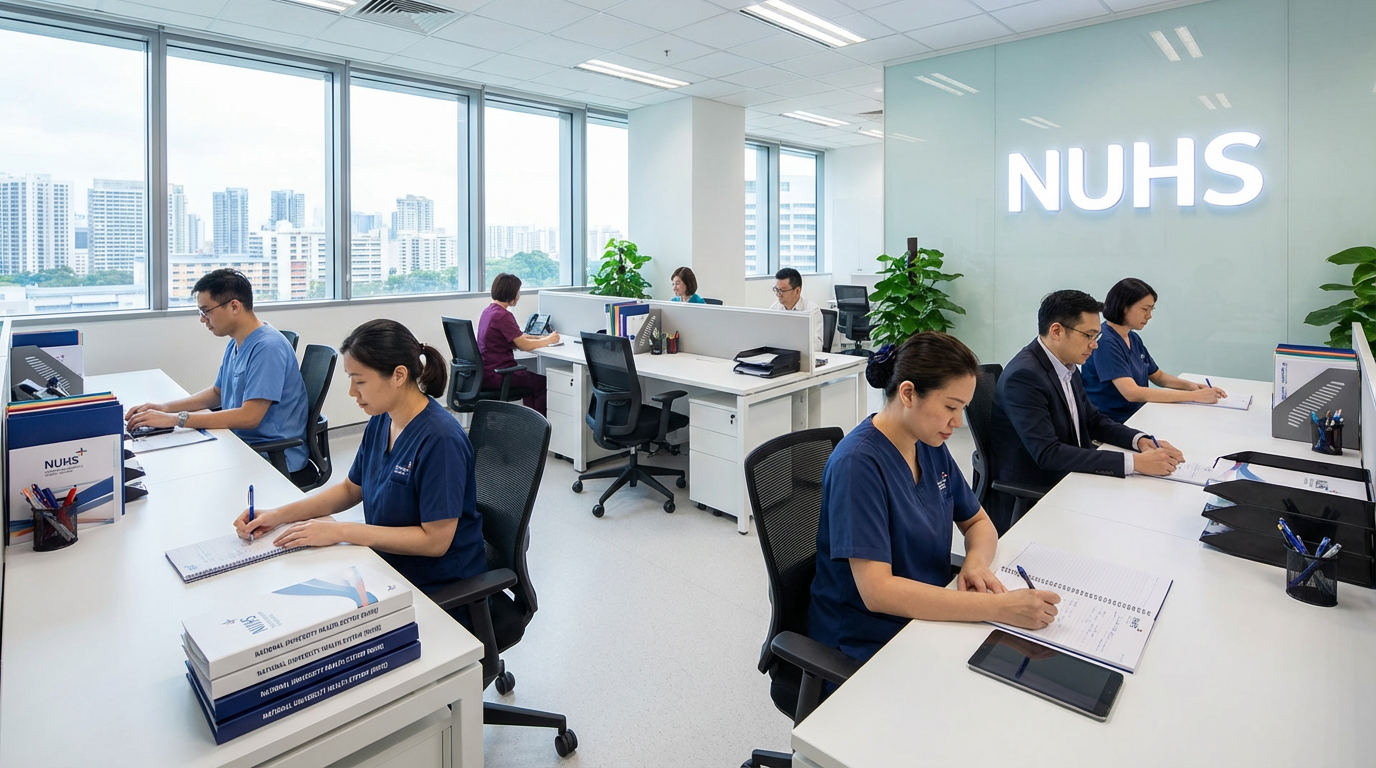
Healthcare institutions in Singapore operate under stringent infection control protocols that extend far beyond clinical areas. Administrative zones, nursing stations, and patient-facing departments all require stationery supplies, yet these items must meet standards that general office environments never consider. This article explores how infection control requirements shape stationery procurement decisions in hospitals, clinics, and healthcare facilities, drawing on insights from procurement officers and infection control specialists who navigate these unique challenges daily.
Surface Material Selection: Beyond Aesthetics
The choice of stationery materials in healthcare settings begins with a fundamental question: can this item be effectively cleaned and disinfected? Traditional office supplies often feature porous materials, fabric covers, or textured surfaces that trap pathogens and resist standard cleaning protocols. Healthcare procurement teams must evaluate every item through the lens of infection control.
An infection control nurse at a major Singapore hospital explained how they assess stationery items. Notebooks used in clinical areas must have smooth, non-porous covers that can withstand repeated wiping with hospital-grade disinfectants. This immediately rules out fabric-covered journals, leather-bound planners, and any item with exposed cardboard edges. The hospital standardized on polypropylene-covered notebooks with sealed edges—materials that can be wiped down with quaternary ammonium compounds or alcohol-based disinfectants without degradation.
Pens present a similar challenge. Ballpoint pens with rubber grips, while comfortable for extended writing, create crevices where bacteria can accumulate. The hospital switched to smooth-barrel pens made entirely of hard plastic. Some departments went further, adopting pens with antimicrobial additives in the plastic compound itself. While these additives don't eliminate the need for regular cleaning, they provide an additional layer of protection between disinfection cycles.
The procurement team learned these lessons through experience. An earlier purchase of executive-style notebooks with soft-touch covers seemed appropriate for senior staff offices. However, when infection control conducted routine environmental sampling, they found bacterial contamination on several notebooks that had been in use for only a few weeks. The soft-touch coating, while pleasant to handle, was porous enough to harbor microorganisms despite regular surface cleaning. The entire batch was withdrawn from circulation, and the procurement policy was revised to explicitly exclude porous materials from approved items.
Shared vs. Personal Items: Rethinking Office Norms
In typical office environments, sharing pens or borrowing a notepad from a colleague's desk is unremarkable. Healthcare settings require a different approach. Items that move between individuals or between clean and potentially contaminated areas become vectors for pathogen transmission.
A nursing manager described their department's shift to personal-issue stationery. Each staff member receives a designated set of pens, a notebook, and a clipboard at the start of their employment. These items are labeled with the individual's name and are not to be shared. The items remain in the clean administrative zone and never enter patient rooms or clinical areas. For documentation that must occur in patient areas, the hospital provides single-use paper forms and designated pens that are disinfected after each use or discarded if they enter isolation rooms.
This approach required a cultural shift. Nurses accustomed to grabbing any available pen from the station desk had to adapt to using only their assigned items. The manager implemented a color-coding system where each staff member's stationery was a specific color, making it immediately obvious when someone was using another person's pen. The system reduced cross-contamination incidents and also had the unexpected benefit of reducing lost items—staff were more careful with their personally assigned supplies.
For items that must be shared, such as clipboards used for patient assessments, the hospital established cleaning protocols and designated storage. Clipboards are made of solid plastic with no fabric or foam backing. After each use, they are wiped with disinfectant and returned to a designated clean storage rack. A visual management system uses colored tags: green tags indicate clean, ready-to-use clipboards; red tags indicate used clipboards awaiting cleaning. This simple system ensures that contaminated items don't inadvertently get reused before proper disinfection.
Procurement Specifications: Writing Infection Control into Contracts
Healthcare procurement teams in Singapore have learned to embed infection control requirements directly into tender specifications. It's not sufficient to request "notebooks" or "pens"—the specifications must detail material properties, cleanability, and compliance with relevant standards.
A procurement officer at a healthcare group shared their standard specification template for clinical area stationery. For notebooks, the specification requires polypropylene or polyethylene covers with a minimum thickness of 0.5mm, sealed edges with no exposed cardboard, wire-o or plastic coil binding (no glued spines that can harbor moisture), and resistance to common hospital disinfectants including 70% isopropyl alcohol and quaternary ammonium compounds. Suppliers must provide test reports demonstrating that the materials don't degrade, discolor, or crack after 100 cleaning cycles.
For pens, specifications include smooth, non-porous barrels with no rubber or foam components, retractable mechanisms that minimize exposed parts, and compatibility with alcohol-based hand sanitizers (since pens are often handled immediately after hand hygiene). One hospital requires suppliers to provide samples that undergo accelerated aging tests—the pens are subjected to repeated disinfectant exposure and mechanical stress to simulate months of clinical use. Only pens that maintain functionality and appearance after this testing are approved for purchase.
These detailed specifications initially met resistance from suppliers accustomed to standard office product catalogs. However, as more healthcare institutions adopted similar requirements, specialized products emerged. One supplier developed a line of "clinical-grade" stationery specifically designed for healthcare environments, with materials and construction methods that meet infection control standards. The products command a premium price—approximately 40% higher than standard office equivalents—but healthcare buyers accept this as a necessary cost of maintaining safety standards.
Zone-Based Procurement: Matching Products to Risk Levels
Not all areas of a healthcare facility require the same level of infection control rigor. Singapore hospitals typically use a zone-based approach that classifies areas by contamination risk and applies different procurement standards accordingly.
An operations manager explained their facility's three-zone system. Zone 1 includes administrative offices, conference rooms, and other areas with no patient contact. Standard office stationery is acceptable here, though the hospital still favors easily cleanable materials as a general policy. Zone 2 covers nursing stations, outpatient clinics, and other areas with patient interaction but lower infection risk. Stationery in these areas must meet the cleanability standards described earlier—non-porous materials, smooth surfaces, and disinfectant resistance. Zone 3 encompasses isolation rooms, operating theaters, and intensive care units. These areas use minimal stationery, and any items that enter must be either single-use disposable or undergo terminal sterilization.
This zoning system extends to procurement workflows. When a department requests stationery, the procurement system automatically checks the department's zone classification and presents only approved items for that zone. A request from the finance department (Zone 1) might include leather-bound planners and fabric-covered folders. The same request from an emergency department (Zone 2) would show only polypropylene-covered notebooks and plastic folders. This automated compliance reduces the risk of inappropriate items being purchased for clinical areas.
The manager noted that zone boundaries sometimes create practical challenges. A doctor who works in both administrative offices and clinical wards might prefer to carry a single notebook rather than maintaining separate notebooks for each area. The hospital's policy requires that any item moving between zones must meet the highest applicable standard—in this case, Zone 2 requirements. This means the doctor's notebook must be clinical-grade even when used in administrative areas. Some staff initially resisted this policy as unnecessarily restrictive, but after education on infection control principles, compliance improved.
Supplier Audits and Quality Assurance
Healthcare procurement in Singapore increasingly includes supplier audits to verify that manufacturing processes align with the institution's quality and safety standards. For stationery suppliers, this is a relatively new expectation that requires adaptation.
A quality assurance manager described their hospital group's supplier audit program. Suppliers of clinical-grade stationery must undergo an initial audit before approval and periodic re-audits every two years. The audit team examines manufacturing facilities for cleanliness, quality control processes, and material sourcing documentation. They verify that materials claimed to be antimicrobial or disinfectant-resistant actually meet those specifications through independent testing.
One audit revealed a concerning finding. A supplier claimed their notebooks used polypropylene covers, but testing showed the material was actually a polypropylene-polyethylene blend with a higher polyethylene content than disclosed. While both materials are non-porous, the blend had lower chemical resistance and showed signs of degradation after repeated disinfectant exposure. The hospital suspended purchases from that supplier until they corrected the material composition and updated their documentation.
The audit program also examines suppliers' understanding of healthcare requirements. During one audit, the team asked the supplier's production manager to explain why sealed edges were important for clinical notebooks. The manager couldn't articulate the infection control rationale, suggesting that the company was simply following specifications without understanding their purpose. The hospital provided training to the supplier's team on healthcare infection control principles, reasoning that a supplier who understands the "why" behind specifications is more likely to maintain quality and proactively identify potential issues.
Cost-Benefit Analysis: Justifying Premium Pricing
Clinical-grade stationery costs significantly more than standard office supplies, and healthcare procurement teams must justify these expenses to finance departments focused on cost control. The key is demonstrating that the premium price is offset by reduced infection risk and associated costs.
A finance manager at a hospital shared their cost-benefit analysis for switching to clinical-grade notebooks. Standard office notebooks cost SGD 2.50 per unit; clinical-grade alternatives cost SGD 3.50. For an annual purchase volume of 5,000 notebooks, the additional cost is SGD 5,000. However, the hospital's infection control data showed that environmental contamination incidents in nursing stations decreased by 30% after implementing clinical-grade stationery. Even a single healthcare-associated infection (HAI) costs the hospital tens of thousands of dollars in extended patient stays, additional treatments, and potential liability. Preventing just one HAI per year through better infection control practices—including appropriate stationery—more than justifies the additional procurement cost.
The analysis also considered staff efficiency. Nurses reported that clinical-grade notebooks, despite their utilitarian appearance, were more durable than standard office notebooks. The sealed edges and robust covers meant the notebooks lasted longer in the demanding clinical environment. The effective lifespan increased from an average of three months to six months, reducing the actual cost difference between standard and clinical-grade options.
What materials are considered acceptable for stationery used in Singapore hospital clinical areas?
Acceptable materials for clinical area stationery are non-porous, smooth-surfaced, and resistant to hospital-grade disinfectants. Polypropylene and polyethylene plastics are most commonly specified for notebook covers, folders, and clipboards. Pens should have hard plastic barrels without rubber grips or foam components. Materials must withstand repeated cleaning with 70% isopropyl alcohol, quaternary ammonium compounds, and other common hospital disinfectants without degrading, cracking, or discoloring. Suppliers should provide test reports demonstrating chemical resistance and durability through multiple cleaning cycles. Porous materials like fabric, leather, untreated cardboard, and soft-touch coatings are generally prohibited in clinical areas due to their inability to be effectively disinfected.
How do Singapore healthcare institutions balance infection control requirements with staff preferences for comfortable, high-quality stationery?
Healthcare institutions address this balance through zone-based policies and education. Administrative areas with no patient contact can use standard office stationery, allowing staff to choose items based on personal preference and comfort. For clinical areas, institutions focus on educating staff about the infection control rationale behind material restrictions, helping them understand that clinical-grade stationery is a patient safety measure rather than an arbitrary policy. Some hospitals involve clinical staff in product selection, allowing them to test different clinical-grade options and choose the most comfortable among compliant alternatives. Institutions also invest in higher-quality clinical-grade products—while these items may lack the aesthetic appeal of traditional office supplies, they offer good writing performance and durability, making them acceptable to most staff once the safety rationale is understood.
Procuring stationery for healthcare facilities in Singapore? Infection control requirements demand specialized products and supplier expertise. Our team understands the unique needs of healthcare institutions and can provide clinical-grade stationery that meets stringent safety standards without compromising functionality. Contact us to discuss how we can support your facility's infection control goals.