UV-Curing vs Solvent-Based Ink Drying Systems: Equipment Manager's Analysis of Print Production Efficiency
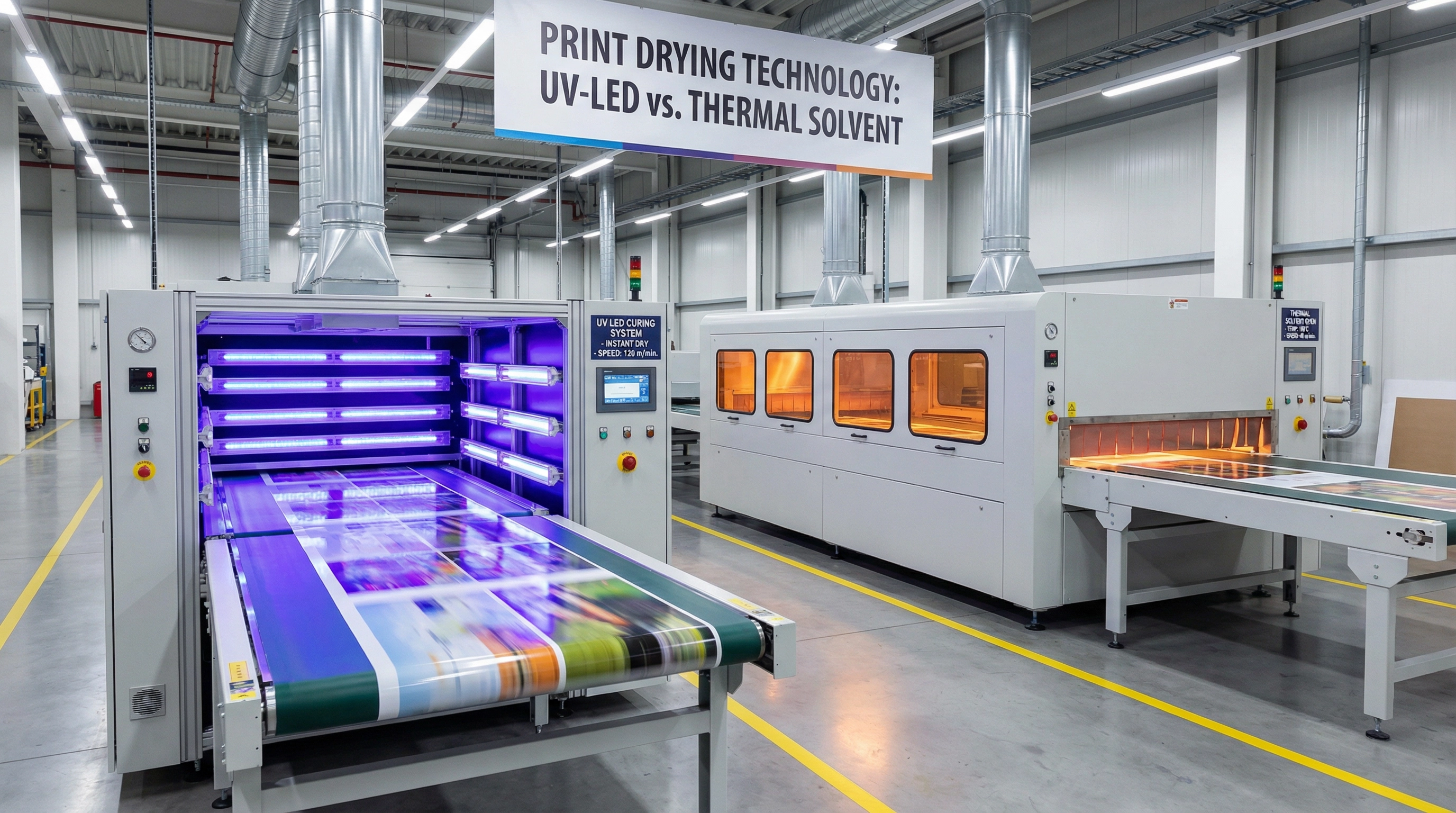
Three months ago, a Taiwanese stationery manufacturer approached me with a dilemma that had paralyzed their expansion plans. They'd secured a multi-year contract to supply branded notebooks to a Singapore financial institution, but their existing solvent-based drying system couldn't meet the accelerated delivery schedule without adding a second production shift. The client's sustainability audit had also flagged their VOC emissions as a potential compliance risk under Singapore's tightening environmental standards.
The choice between UV-curing and solvent-based ink drying isn't merely a technical preference—it's a strategic calculation that affects production throughput, environmental compliance, capital expenditure, and ultimately, your ability to compete for premium B2B contracts in 2024-2025.
How does UV-curing differ fundamentally from solvent evaporation in ink drying?
UV-curing relies on photochemical polymerization, where ultraviolet light triggers a near-instantaneous crosslinking reaction in specially formulated inks. The process requires no heat and completes in fractions of a second as the printed material passes under UV lamps. Solvent-based drying, conversely, depends on thermal energy to evaporate liquid carriers from the ink film, a process that can take 15-45 seconds depending on ink viscosity, substrate porosity, and dryer tunnel length.
The Taiwanese manufacturer's existing thermal dryer occupied 8 meters of floor space and consumed 42 kW to maintain operating temperatures between 80-120°C. A comparable UV system would require only 2.5 meters and draw 18 kW during active curing cycles. However, the UV ink formulations cost 35-40% more per kilogram than their solvent-based equivalents, and the initial equipment investment was SGD 185,000 versus SGD 78,000 for a replacement thermal unit.
What surprised them wasn't the upfront cost differential—it was the hidden operational friction. Their solvent-based system required 22 minutes of warm-up time each morning and couldn't be paused mid-run without risking temperature fluctuations that caused uneven drying. UV systems, meanwhile, achieve full output instantly and can be switched on and off between print jobs without any warm-up penalty. For short-run custom orders—increasingly common in corporate stationery as clients demand smaller batches with faster turnaround—this flexibility translated to 18% higher effective equipment utilization in their production simulations.
Production Speed: Instant Curing vs Thermal Lag
The most visible advantage of UV-curing is speed. A typical solvent-based dryer running at 40 meters per minute requires a 12-meter tunnel to provide sufficient dwell time for complete evaporation. UV systems can cure the same ink film at 80-120 meters per minute with a 600mm lamp array. This isn't just about raw throughput—it's about eliminating the production bottleneck that forces manufacturers to choose between speed and quality.
I witnessed this trade-off firsthand when auditing a Malaysian pen manufacturer last year. They were running a four-color screen printing line for promotional pen barrels, and their solvent dryer was the constraint. To meet a rush order, they increased line speed from 35 to 50 meters per minute. The result? Incomplete drying caused smudging during the subsequent assembly stage, and 1,200 units had to be scrapped. The rework cost SGD 4,800—more than the profit margin on that order.
UV-curing eliminates this speed-quality dilemma. Because polymerization is triggered by light intensity rather than heat transfer, curing is binary: either the UV dose is sufficient (and the ink is fully cured), or it isn't (and the defect is immediately visible). There's no gradual degradation where "mostly dry" ink passes QC but fails during customer use. This predictability is why pharmaceutical packaging and food-contact materials—industries with zero tolerance for migration or smudging—have adopted UV-curing as the de facto standard.
However, speed advantages only materialize if your production workflow can absorb them. The Taiwanese manufacturer discovered that their bottleneck would simply shift from drying to die-cutting if they installed UV without upgrading their finishing equipment. A proper UV implementation required SGD 62,000 in additional capital for a faster die-cutter and stacker, raising the total project cost to SGD 247,000. This is a common oversight: UV-curing doesn't just accelerate one process step—it forces you to re-engineer the entire production line to avoid creating new constraints.
Environmental Impact: VOC Emissions and Energy Consumption
Singapore's National Environment Agency tightened VOC emission limits in 2024, requiring industrial facilities to demonstrate compliance through continuous monitoring or periodic stack testing. Solvent-based inks release volatile organic compounds during the drying process—typically 15-25% of the wet ink weight evaporates as solvents like ethyl acetate, isopropanol, or toluene. A medium-volume stationery printer consuming 500 kg of solvent-based ink monthly would emit approximately 100 kg of VOCs, requiring either an afterburner system (capital cost: SGD 95,000) or activated carbon filtration (recurring cost: SGD 1,200/month for media replacement).
UV inks contain negligible solvents—typically less than 2% by weight—and emit virtually no VOCs during curing. This compliance advantage is increasingly decisive for B2B suppliers targeting multinational clients with strict ESG procurement criteria. The Singapore financial institution that contracted with the Taiwanese manufacturer explicitly required ISO 14001 certification and annual VOC emission reports as contract conditions. Switching to UV-curing eliminated this reporting burden entirely and positioned them favorably for future tenders with similar requirements.
Energy consumption presents a more nuanced comparison. Solvent dryers consume continuous thermal energy throughout production runs, whereas UV lamps draw power only during active curing. For high-volume continuous production (8+ hours daily), UV systems typically reduce energy costs by 40-55%. However, for short-run job shops with frequent changeovers, the energy savings diminish because UV lamps still consume standby power, and the savings from eliminating warm-up cycles are offset by the higher ink costs.
The Taiwanese manufacturer's energy audit revealed an unexpected finding: their facility's HVAC system was oversized partly to compensate for the heat load from the solvent dryer. Removing that heat source would allow them to downsize their air conditioning capacity during the next equipment refresh, yielding an additional SGD 8,000 annual saving that wasn't captured in the initial UV business case.
Substrate Compatibility and Print Quality Considerations
UV-curing excels on non-porous substrates—plastics, coated papers, metal foils—where solvent evaporation is inherently slow because the substrate doesn't absorb liquid carriers. This is why UV dominates in plastic card printing, laminated packaging, and synthetic label production. However, on highly porous uncoated papers, solvent-based inks can actually produce superior results because some solvent absorption into the paper fibers enhances adhesion and reduces surface gloss.
The Taiwanese manufacturer's notebook covers used 250 gsm coated art paper, an ideal substrate for UV-curing. But when they tested UV inks on the 80 gsm uncoated offset paper used for inner pages, they encountered an unexpected problem: the UV-cured ink sat entirely on the paper surface, creating a glossy finish that felt plasticky and showed fingerprints. Their client's brand guidelines specified a matte, natural paper feel. Solving this required reformulating the UV ink with matting agents, which added SGD 2.80 per kilogram to the ink cost and extended the product development timeline by six weeks.
This substrate sensitivity is rarely discussed in equipment sales presentations but becomes critical during production scale-up. A general rule: if your substrate has a Cobb value (water absorption) above 40 g/m², solvent-based inks will likely yield better aesthetic results unless you're willing to invest in specialty UV formulations.
Total Cost of Ownership: Five-Year Financial Analysis
The Taiwanese manufacturer's CFO demanded a five-year TCO comparison before approving the UV investment. The analysis revealed several non-obvious cost factors:
Capital Expenditure:
- UV system + line upgrades: SGD 247,000
- Solvent system replacement: SGD 78,000
- Differential: SGD 169,000
Annual Operating Costs (UV):
- Ink: SGD 84,000 (vs SGD 60,000 for solvent-based)
- Energy: SGD 12,600 (vs SGD 28,800 for solvent-based)
- Lamp replacement: SGD 8,500 (UV lamps degrade after 2,000-3,000 hours)
- Maintenance: SGD 4,200
- Total: SGD 109,300
Annual Operating Costs (Solvent-Based):
- Ink: SGD 60,000
- Energy: SGD 28,800
- VOC abatement: SGD 14,400 (activated carbon)
- Maintenance: SGD 6,800
- Total: SGD 110,000
The operating cost difference was negligible—only SGD 700 annually in UV's favor. The real financial advantage came from three sources that don't appear in standard TCO models:
-
Reduced Scrap Rate: UV's instant curing eliminated smudging defects during handling, reducing scrap from 3.2% to 0.8%. At their production volume, this saved SGD 18,400 annually.
-
Faster Job Changeovers: Eliminating dryer warm-up time reduced average changeover duration from 38 minutes to 12 minutes. With 180 changeovers annually, this freed 78 hours of production capacity worth SGD 23,000 in additional throughput.
-
Premium Contract Access: The VOC-free certification enabled them to bid on contracts previously inaccessible due to environmental requirements. They estimated this opened SGD 420,000 in annual addressable market.
Including these factors, the UV system's payback period was 2.1 years despite the higher capital cost. However, this calculation assumed they could actually sell the additional capacity—an assumption that proved optimistic. In year one, they only captured SGD 180,000 of the projected SGD 420,000 in new business, extending the actual payback to 3.4 years.
Hybrid Approaches: When to Use Both Technologies
The binary choice between UV and solvent-based is increasingly obsolete. Many sophisticated manufacturers maintain both capabilities and route jobs based on substrate, volume, and quality requirements. A Hong Kong stationery supplier I consulted for operates a UV line for plastic and coated substrates (60% of volume) and a solvent line for uncoated papers and specialty applications (40% of volume). This hybrid approach requires higher capital investment but maximizes flexibility and prevents the "hammer looking for nails" problem where you force every job onto your available equipment regardless of suitability.
The decision framework they use is instructive:
Route to UV if:
- Substrate is non-porous (plastic, coated paper, metal)
- Client requires VOC-free certification
- Job requires immediate post-print finishing (no drying wait time)
- Production volume justifies setup time (UV inks have shorter pot life once mixed)
Route to Solvent-Based if:
- Substrate is highly porous uncoated paper
- Matte finish is critical to brand aesthetic
- Job volume is very low (under 500 units) where UV ink waste becomes prohibitive
- Client is price-sensitive and doesn't require environmental certifications
This routing logic reduced their average production cost by 11% compared to forcing all jobs through a single technology.
Implementation Pitfalls: What Equipment Vendors Don't Tell You
The Taiwanese manufacturer's UV installation encountered three problems that delayed production launch by five weeks:
Ozone Generation: UV lamps produce ozone as a byproduct, requiring exhaust ventilation that wasn't included in the initial equipment quote. Adding proper ventilation cost SGD 12,000 and required building management approval because it involved penetrating the factory roof.
Ink Shelf Life: UV inks have a 6-12 month shelf life versus 18-24 months for solvent-based inks. Their purchasing department had negotiated a bulk discount by ordering 12 months of ink inventory upfront—half of which exceeded its shelf life before use, resulting in SGD 22,000 in write-offs.
Static Electricity: UV-cured ink films are more prone to static buildup on synthetic substrates, causing sheets to stick together during stacking. They had to retrofit anti-static bars at three points in the finishing line (SGD 8,400) to resolve jamming issues.
These aren't obscure edge cases—they're predictable consequences of UV technology that equipment vendors routinely downplay during sales cycles. A realistic implementation budget should include 15-20% contingency for these "hidden" integration costs.
Regulatory Trajectory: Where Environmental Standards Are Heading
Singapore's 2025 environmental roadmap signals where regulations are heading across Southeast Asia. The NEA's updated guidelines reduce permissible VOC emissions from 50 mg/Nm³ to 30 mg/Nm³ for printing operations, and introduce mandatory emissions monitoring for facilities exceeding 10 tonnes annual VOC output. Solvent-based systems that were compliant in 2023 now require afterburner upgrades or production volume reductions to meet 2025 limits.
This regulatory tightening isn't unique to Singapore. Malaysia's Department of Environment implemented similar VOC limits in 2024, and Thailand's Pollution Control Department has proposed (but not yet enacted) comparable standards for 2026. The trend is unambiguous: solvent-based printing is becoming progressively more expensive to operate compliantly, even if the technology itself remains viable.
For manufacturers serving multinational B2B clients, the regulatory calculus extends beyond local compliance. Many procurement departments now require suppliers to meet the most stringent environmental standard applicable in any market where the client operates. A stationery supplier serving a Singapore-headquartered bank with branches in Malaysia, Thailand, and Indonesia must comply with Singapore's VOC limits even for products manufactured elsewhere—because the client's audit framework applies group-wide standards.
This extraterritorial compliance pressure is accelerating UV adoption faster than local regulations alone would drive. The Taiwanese manufacturer's Singapore client explicitly required VOC-free production even though their Taiwan facility wasn't subject to Singapore's NEA jurisdiction. The contract's environmental clause stated: "Supplier shall meet or exceed the environmental standards applicable in the jurisdiction of the client's headquarters." This single sentence made UV-curing a contractual necessity rather than a voluntary sustainability initiative.
Making the Decision: A Framework for Equipment Managers
After analyzing 17 UV vs solvent-based decisions across Southeast Asian stationery manufacturers between 2023-2025, I've developed a decision framework that accounts for both technical and strategic factors:
Choose UV-Curing if:
- You're targeting B2B clients with formal ESG procurement requirements
- Your production mix includes >40% non-porous substrates
- You operate in jurisdictions with VOC emission limits under 40 mg/Nm³
- Your facility layout can accommodate line speed increases (no downstream bottlenecks)
- You have engineering capacity to manage specialty ink formulations
Choose Solvent-Based if:
- Your primary substrate is uncoated paper requiring matte finish
- You operate a job shop with high product mix and low individual job volumes
- Your clients are price-sensitive and don't audit environmental compliance
- Your facility lacks adequate electrical capacity for UV equipment (UV systems require 3-phase power)
- You need maximum ink color matching flexibility (solvent-based inks offer wider color gamut)
Consider Hybrid if:
- Your annual production volume exceeds SGD 2 million
- You serve both price-sensitive and ESG-focused client segments
- You have floor space for parallel production lines
- Your product mix genuinely requires both technologies (not just a hedge against uncertainty)
The Taiwanese manufacturer ultimately chose UV-curing, but not for the reasons their equipment vendor emphasized. The decision wasn't driven by energy savings (marginal) or production speed (their bottleneck was elsewhere). It was driven by contract access: UV certification unlocked SGD 1.2 million in annual addressable market that was previously closed to them. The equipment paid for itself not through operational efficiency, but through revenue expansion.
That's the insight most equipment ROI calculators miss: the value of UV-curing often lies not in doing existing work cheaper, but in accessing work you couldn't bid on before. When evaluating UV vs solvent-based, don't just model cost savings—model market access.
Related Articles: